
Ruby Amatulla
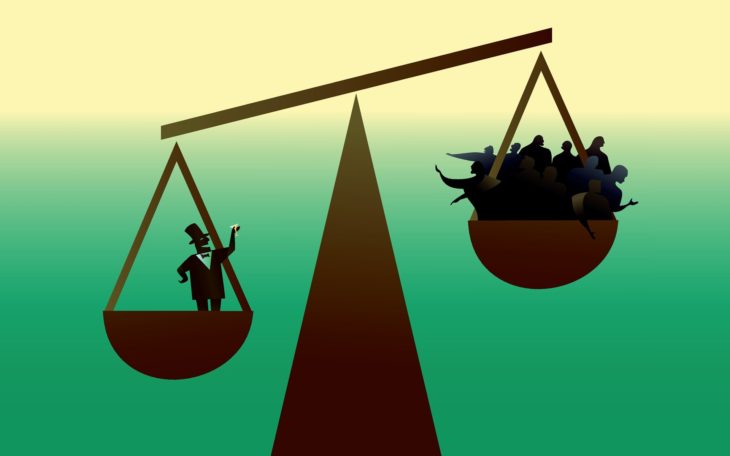
More than two thousand years ago, the Roman statesman Marcus Tullius Cicero, one of the last great defenders of the Roman Republic, warned: “The sinews of war are endless money.” His words captured a timeless truth. Wars are enormously costly and destructive. They are financed by ordinary people through taxes, debt, inflation, and sacrifice, while political and economic interests often reap disproportionate rewards. Throughout history, civilians have borne the greatest burden of war.
Too often, short-sighted rulers, ambitious generals, and powerful elites have turned to war to expand their influence, secure political popularity, or pursue strategic and economic interests. The people, meanwhile, pay the price in blood, treasure, and shattered lives. History is littered with these moral failures.
This pattern was evident in ancient Rome. As the Republic descended into repeated military conflicts and internal political crises, many Roman citizens abandoned the constitutional principles championed by statesmen like Cicero. Instead, they placed their hopes in charismatic military leaders who promised glory, prosperity, and national greatness. The result was decades of civil strife, growing inequality, political violence, and ultimately the collapse of the five-century-old Roman Republic, which gave way to imperial rule.
That history offers an unsettling reflection for the United States today. Over the past several decades, America has experienced increasing political polarization, institutional distrust, and deep social divisions. Long and costly wars have left many questioning their purpose and consequences, while economic and social strains have intensified. Although history never repeats itself exactly, the parallels with Rome invite careful reflection. The pressing question is whether the 250-year-old American democratic experiment can renew itself or whether it, too, risks gradual erosion from within.
The twentieth century provides an even more sobering reminder. The two World Wars claimed nearly 100 million lives and left tens of millions more wounded. Many societies were devastated, economies were shattered, and countless civilians paid the ultimate price. Yet even amid such destruction, some individuals and industries accumulated immense wealth and influence. Cicero’s warning remains disturbingly relevant.
Cicero was a patriot who devoted his life to preserving the Republic and the rule of law. Yet the very forces that dismantled the Republic eventually declared him an enemy of the state.
The modern world sought to overcome this darker side of human nature. The American Declaration of Independence proclaimed that all people are created equal and possess inalienable rights. Following the devastation of the Second World War, the United Nations Charter, adopted in 1945, affirmed the sovereign equality of nations and their right to security, territorial integrity, and peaceful development. The Universal Declaration of Human Rights in 1948 further recognized the inherent dignity and equal rights of every member of the human family.
These milestones represented some of humanity’s greatest moral achievements. They embodied a hope that law would replace force, cooperation would replace domination, and justice would triumph over the politics of power.
Many of the nascent democracies during the post-colonial era of the 1950s and 1960s and since have been hijacked by autocrats and tyrants, supported by their elites, on a similar pretext of saving the country from crisis. Bloodshed and wars ensued.
Around the world, the language of human rights, international law, and peaceful coexistence is often overshadowed by geopolitical rivalry, military escalation, economic coercion, and the doctrine that might makes right. The optimism that once accompanied the post-war international order has, in many places, given way to renewed uncertainty and confrontation.
Why are all these collective wisdom and values now being pushed to the back burner, and a new era of ruthlessness, aggression, reckless militarism, and might-is-right policy again dragging the civilized world down to the dark ages?
These are the defining moral challenges of our time. Until we confront the enduring weaknesses in human nature as honestly as we celebrate our achievements, the specter of war, death, destruction, injustice, and the might-is-right modus operandi of the powerful will always hijack justice and peace.
Solution Lies in the Collective Voice of Humanity
History teaches us not only how civilizations decline but also how they can renew themselves. Although there are striking similarities between the fall of the Roman Republic two thousand years ago and many of the challenges confronting the modern world, there is one profound difference that gives humanity reason for hope.
Never before have people across the globe been so closely connected or shared such a common understanding of fundamental human values. Today, millions of people, regardless of nationality, race, religion, or culture, increasingly recognize that every human being deserves freedom, dignity, justice, equality before the law, and the opportunity to live in peace. This universal moral consciousness did not exist in the age of Cicero, nor even during the first half of the twentieth century.
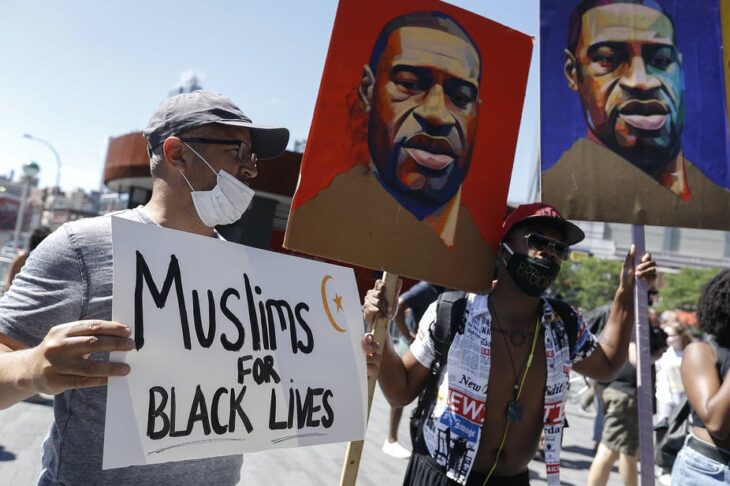
The world witnessed this new reality when the tragic killing of George Floyd in Minneapolis sparked the Black Lives Matter movement. What began as a local protest quickly spread across continents, bringing together millions of people of different races, religions, and nationalities in a common demand for justice. Regardless of differing opinions about every aspect of the movement, it demonstrated a remarkable truth: an injustice committed anywhere can awaken the conscience of the entire world.
Modern communication has given humanity a power that no previous generation possessed. News travels instantly across the globe. Images of suffering reach billions of people within minutes. For the first time in history, ordinary citizens can collectively witness injustice and respond together.
This emerging global conscience may become humanity’s strongest defense against tyranny, racism, supremacism, aggression, and the abuse of power. Governments and powerful interests still possess enormous military, political, and economic resources. Yet they increasingly face another force: the informed judgment of people everywhere.
The Gaza atrocities have an even greater collective impact. The recent polls consistently demonstrate that 60 to 70% Americans oppose injustices against the Palestinians as well as the “war of aggression” against Iran declared by more than 100 experts on international law. The global opinion is resonating at that level of rejection and condemnation. Many prominent American politicians who were Israel’s allies before are warning Israel of its isolation from the global community. That is forceful. American, European, and other politicians and rulers are compelled to respond to that publicly or behind closed doors. And the impact is being felt in every political corridor worldwide, irrespective of the differences.
The future, therefore, depends not only on governments but also on a continuous people-to-people movement that transcends borders. Like a living organism, humanity must learn to respond swiftly and peacefully whenever any government, corporation, ideology, or elite alliance violates the principles of justice, human rights, or international law.
Today’s defenders of justice possess tools that Cecero could never have imagined. Organizations such as Amnesty International, Human Rights Watch, and countless journalists, scholars, activists, and ordinary citizens have shown how moral courage can expose injustice and influence public opinion worldwide.
Imagine how much stronger humanity could become if people everywhere united—not under a single government or ideology—but around a shared commitment to oppose unjust wars, colonialism in all its modern forms, racial supremacy, oppression, exploitation, and every attempt by the powerful to deny others their freedom and dignity.
Our greatest hope lies in the collective voice of humanity—a voice strong enough to hold every government, every corporation, every military alliance, and every center of power accountable to universal principles of justice.
The enduring struggle of the twenty-first century is not between East and West, North and South, or one civilization against another. The ultimate guardian of freedom and justice is neither an empire nor an army. It is the awakened conscience of humanity, the force that changes history.